Day 47 — SFX Sourcing, Audio Tooling, and Planning the System
Context
Today was focused on audio for the first time. I wanted to start getting sound effects into the game—not necessarily the final set, but enough to stand up the system and make interactions feel more alive.
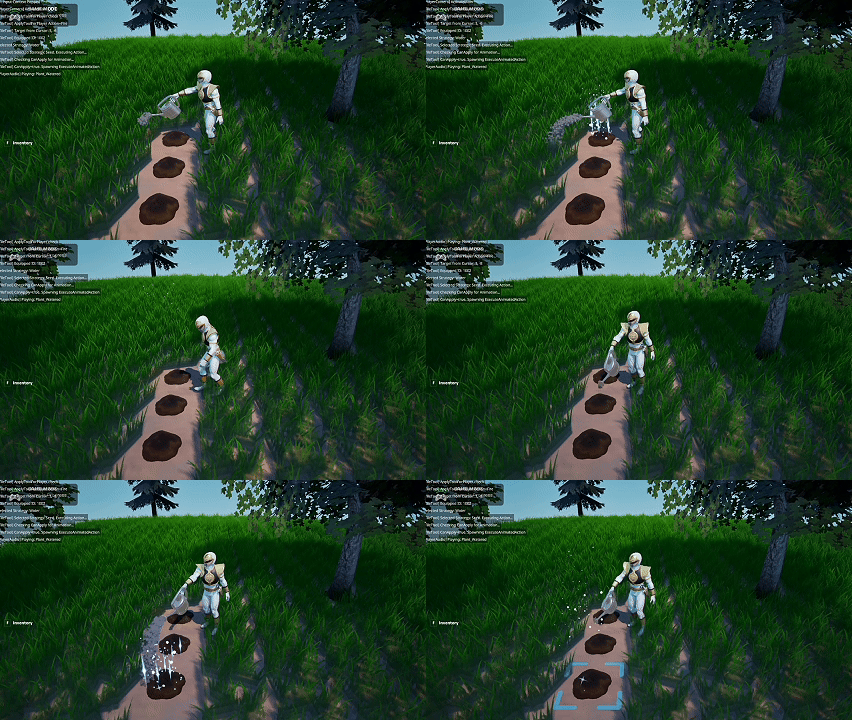 Day 47 preview
Sound Effect Sourcing
I gathered a batch of sound effects from my library. They’re probably not all the perfect long-term picks, but they’re good enough to:
- Start wiring audio into gameplay
- Identify gaps in coverage
- Establish naming and organization patterns early
Building an Audio Search App
Unexpectedly, about half the day went into building a small app to manage audio at scale. My library is large enough that manual searching and prep would be a constant time sink.
The app lets me:
- Search across thousands of audio files
- Copy selected files into a working folder
- Batch rename to match my naming conventions
- Convert everything to .wav for UEFN
This should save a ton of time as the project grows.
Implementation Planning
I haven’t wired the audio into UEFN yet, but I spent time thinking through the right implementation approach because there are multiple use cases:
- One-shot interaction sounds (UI clicks, item pickup/drop, placing furniture)
- Tool actions (shovel, sickle, axe, pickaxe)
- World feedback (watering, harvesting, crafting)
- Ambience and interior/exterior differences
The next step is deciding where audio ownership should live (global system vs. feature-specific components) so it stays scalable.
Summary
What I accomplished:
- Sourced an initial batch of sound effects.
- Built an internal tool to search, batch rename, and convert audio to .wav.
- Mapped out the key audio use cases for the game.
What I learned:
- Audio will get unmanageable fast without tooling.
- Having “good enough” SFX early is valuable for validating feel.
- The hardest part is usually deciding where audio responsibilities belong in the architecture.