Day 59 — Mission System Architecture & Map Authoring Tools
Context
Today was about stepping back and rethinking structure. As Orientation grew more complex, it became clear that the underlying systems needed clearer hierarchy and better tooling support.
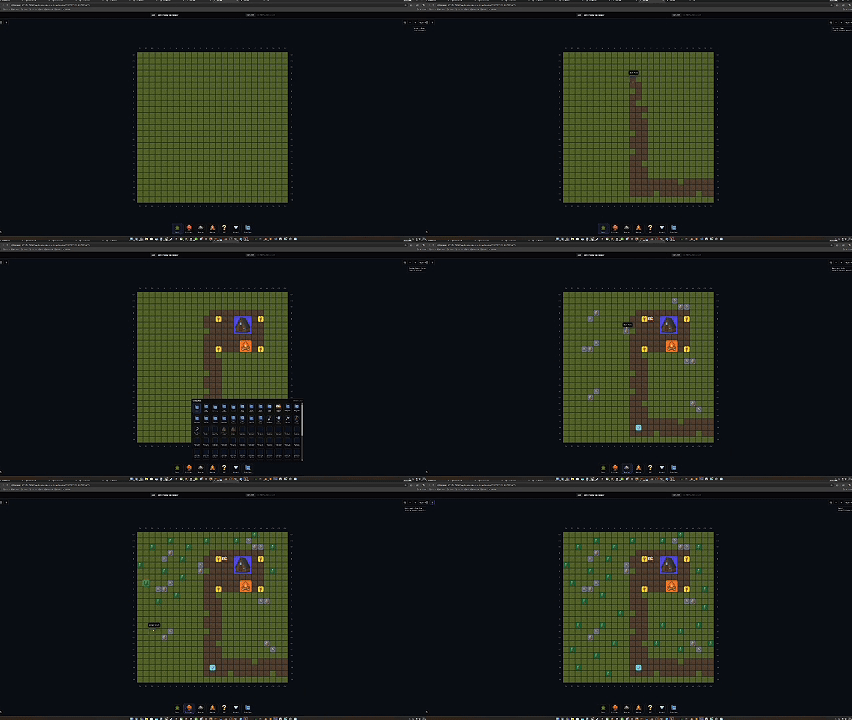 Day 59 preview
Mission System Refactor
I restarted the Mission System from the ground up to make it scalable and explicit.
Instead of treating Orientation as a one-off flow, I reframed it as a Questline composed of multiple Missions, each broken down into Tasks:
- Tasks → atomic objectives
- Missions → collections of up to six tasks
- Questlines → ordered sets of missions
Orientation is now implemented as a Questline, which immediately reduced ambiguity and made progression easier to reason about. There are still bugs, but the direction feels sustainable.
Map / Island Designer App
I also built a local map designer app—similar in spirit to my HouseBuilder tool.
This app allows me to:
- Design island layouts outside of UEFN
- Define structure and intent at a higher level
- Export data that agents inside Island Crossing can parse
Because the HouseBuilder and Map Designer share concepts and tooling, they work together: I can design a map, then have agents interpret it into a curated, playable island.
Summary
What I accomplished:
- Re-architected the Mission System into Tasks → Missions → Questlines.
- Converted Orientation into a Questline.
- Built a local Map / Island Designer app.
- Connected the app conceptually with Island Crossing’s agent workflow.
What I learned:
- Clear hierarchy removes systemic ambiguity.
- Tooling outside the engine can dramatically speed iteration.
- Designing systems for agents is as important as designing for players.