Day 65 — Orientation SFX, Bug Fixes, and Campus Prep
Day 65 — Orientation SFX, Bug Fixes, and Campus Prep
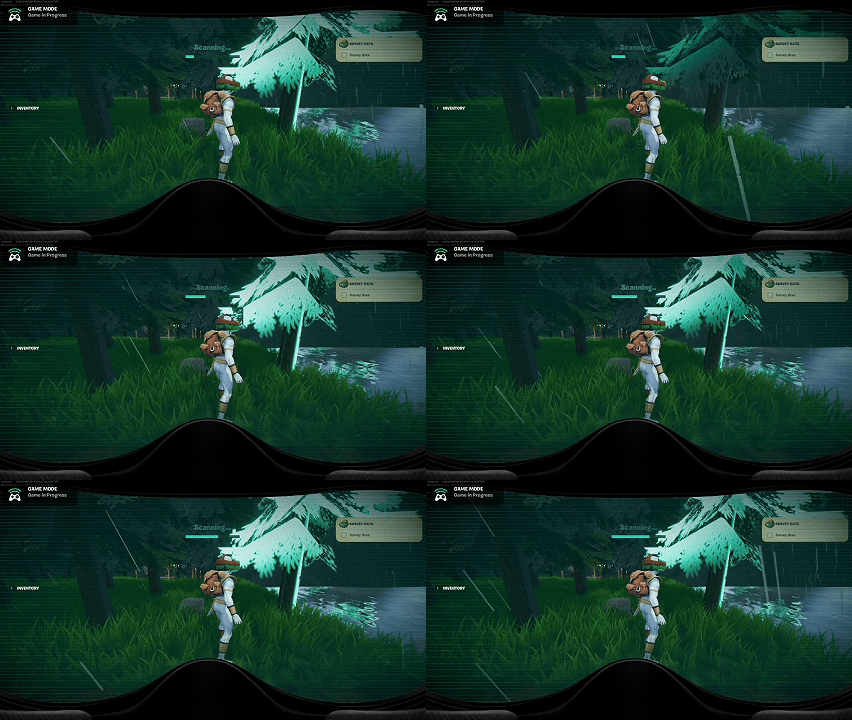 Day 65 — Survey Lens Scanning
Context
After a sudden hard-drive failure and a week spent on other projects and job interviews, today marked my return to Island Crossing. The interruption was a reminder of how fragile local development environments can be, and how quickly momentum can be lost when infrastructure fails. Re-establishing my workflow was the first priority, followed by a focused effort to close out the orientation phase of the project.
This phase is about onboarding: ensuring that new players understand the core systems and feel guided, not lost. The work today was less about new features and more about reinforcing the foundation for a scalable, maintainable player experience.
Orientation SFX Integration
The main technical focus was integrating all sound effects for the orientation sequence, including the Survey Lens. These audio cues are not just polish—they are essential for communicating system state and player intent, especially in a game that leans on subtlety and exploration. Implementing these required careful attention to event triggers and feedback loops, ensuring that each sound reinforces the intended player action without introducing noise or confusion.
Minor Bug Fixes
While working through the SFX integration, several small bugs surfaced—mostly edge cases in the onboarding flow and minor inconsistencies in UI feedback. Fixing these was straightforward, but each one highlighted the importance of robust state management and clear ownership boundaries between systems. No major refactors were needed, but the process reinforced the value of incremental cleanup.
Preparing for Campus Buildout
With orientation content nearly complete, I began laying the groundwork for the shared Campus space. This will be the next major system, requiring new architectural decisions around persistence, player interaction, and modular content loading. The prep work today was mostly organizational: outlining requirements, identifying dependencies, and reviewing lessons from previous systems to avoid repeating past mistakes.
Summary
What I accomplished:
- Restored development environment after hardware failure
- Integrated all orientation sound effects (including Survey Lens)
- Fixed minor onboarding and UI bugs
- Outlined requirements for Campus buildout
What I learned:
- Local infrastructure fragility can disrupt momentum—cloud-based or versioned environments may be worth exploring
- Audio feedback is a core part of system clarity, not just polish
- Incremental bug fixes reinforce system boundaries and reduce future fragility
- Upfront planning for new systems helps avoid architectural debt